Recycling and Sustainability for Gardeners Coney Hall
 Gardeners Coney Hall is built around a simple idea: beautiful outdoor spaces should not come at the expense of the environment. Our recycling and sustainability approach is woven into everyday garden maintenance, plant care, and site clearance. By using responsible waste sorting, careful material recovery, and lower-emission transport, we help keep green spaces tidy while reducing what ends up in landfill. We also aim for a recycling percentage target of 90% across suitable green waste and reusable materials, reflecting a practical commitment to circular gardening practices.
Across Coney Hall and the wider Bromley area, there is a growing emphasis on separating waste streams before they leave the site. That means keeping green waste, soil, timber, metals, plastics, and mixed debris apart wherever possible, so each material can be directed to the right recovery route. This approach fits well with the borough-style focus on cleaner collections and better sorting at transfer points, where recyclables can be processed more efficiently. For gardeners in Coney Hall, it is an everyday habit that supports long-term sustainability rather than a one-off effort.
Our work also includes practical handling of common garden materials such as hedge cuttings, branches, fallen leaves, old compost, and broken planting containers. 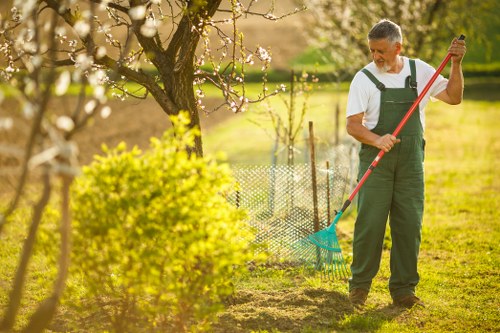 Where suitable, these materials are sent for composting or reprocessing instead of disposal. By treating waste as a resource, Gardeners Coney Hall reduces the environmental load of routine maintenance. Even smaller actions, like separating topsoil from rubble or reusing clean timber edging, contribute to a more sustainable local gardening service.
We also make regular use of local transfer stations and licensed waste facilities serving the Bromley and South East London area. These sites are important links in the recycling chain because they allow materials to be weighed, sorted, and sent onward for recovery in a controlled way. Using nearby transfer stations helps reduce haulage distances, which in turn lowers emissions. For larger clearances and seasonal cutbacks, this is especially valuable: the cleaner the separation on arrival, the higher the chance that valuable materials can be reclaimed rather than discarded.
Our sustainability commitment extends beyond waste alone. The fleet supporting Gardeners Coney Hall includes low-carbon vans chosen for better fuel efficiency and reduced emissions compared with older vehicles.  These vans are used for local journeys, tool transport, and green waste collection, helping to cut the carbon footprint associated with regular garden work. In an area where travel patterns can quickly add up over many visits, smarter transport choices make a noticeable difference. The result is a service that is still responsive, but far more mindful of its environmental impact.
Partnerships with charities are another important part of our sustainability model. Usable items from garden jobs—such as sturdy pots, outdoor furniture, tools, planters, and decorative features—may be set aside for donation where appropriate. Working with local charitable organisations supports reuse before recycling, which is often the best outcome in environmental terms. It also reflects a wider community-minded approach: if an item can serve a second life in a community garden, school project, or charity resale channel, it avoids becoming waste altogether.
 In the same spirit, we pay close attention to the way different boroughs encourage waste separation at source. While local rules can vary, the general direction is clear: keep recyclables clean, avoid mixing green waste with general rubbish, and make sure specialist items are handled through proper channels. For Gardeners Coney Hall, that means a careful, disciplined process on every job. Soil contamination, mixed material loads, and unnecessary bagging are all reduced through better sorting, which makes recycling more effective and more compliant with local expectations.
Our recycling and sustainability measures also include the use of biodegradable or reusable supplies wherever practical. For example, we may favour refillable containers for treatments, reusable sacks for certain jobs, and minimal packaging when ordering materials. Where the work allows, clippings can be chipped and reused as mulch, helping retain moisture in beds and reducing the need for synthetic ground cover. This is a simple but effective way to close the loop within local gardening work.
The aim is not just to recycle more, but to design services that create less waste in the first place. That includes planning routes efficiently, choosing durable equipment, and encouraging repair over replacement where possible.  By combining low-carbon vans, nearby transfer stations, charity partnerships, and a clear recycling percentage target, Gardeners Coney Hall provides a greener way to care for gardens while supporting the environmental goals of the local area. It is a practical, modern approach that keeps Coney Hall’s outdoor spaces thriving with less strain on the planet.